As Cone states, the concept of the cross and the image of the lynching tree might not often be thought of together. However, upon examination their relationship is clearly made apparent and sparks a discussion about Christianity in America today. The statement given in the prompt says that the cross and the lynching tree needs to be seen together to genuinely understand Christian identity in America and heal the racial divide in society. The cross to many is a romanticized symbol of salvation, that God so loved the world he gave his only begotten Son so that mankind can be saved. While many believe this, the acceptance of this truth somewhat erases the brutal and cruel display of torture that the crucifixion represented. When thinking about the cross in this way, the comparison to the lynching tree is easier to understand. The genuinely horrifying recollection of disfigured black lynched bodies swaying in the wind, as onlookers gazed in enjoyment and a sense of “victory” is not something that can be easily forgotten, no matter how much society seems to sweep it under the rug. Black identification with Jesus Christ, the suffering messiah, seems to be more direct because of the parallels faced by Christ on the cross and their lynched black ancestors. These were both chilling and gruesome public displays of torture and execution. Relating this history to present day comes in the renewed forms of black lynching that is experienced today. Understanding the racial divides can only come from acknowledging the terrible injustices faced by black people that can be related to Jesus Christ. Ultimately, the symbol of the cross being transformed into “triumphant beauty,” as Cone calls it, gives hope to overcoming legacies of white supremacy that was explicitly displayed throughout history – whose remnants are still being felt today.
The word of God is offensive, because it is not what we want to hear. Harsh truths such as corrupt preachers oppressing marginal people under the guise of God’s will is not what one usually envisions when he thinks of the word of God. However, it remains a reality. Just as the lynching tree which provides a 19th century parallel to the crucifixion of Jesus Christ, is a harsh reality that must not be forgotten.
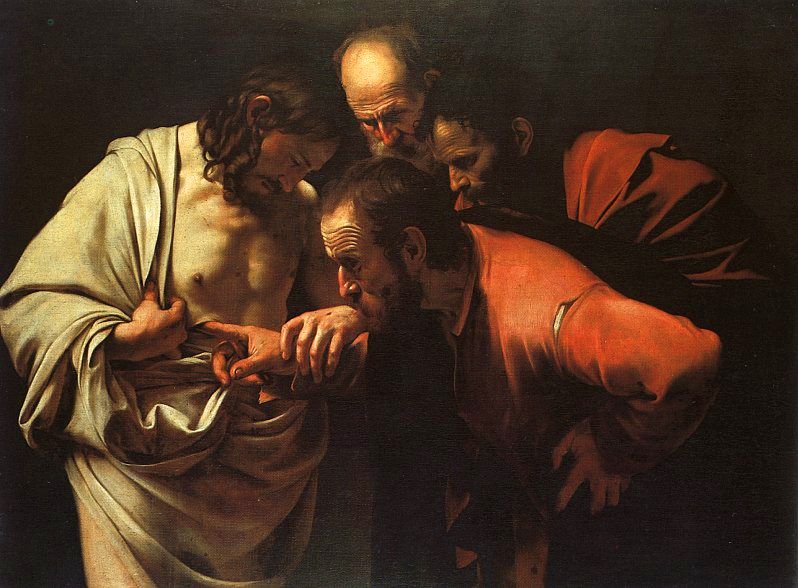
This relates to Goizueta’s denial of the suffering and denial of the poor. Often times, people feel uncomfortable to see these vulnerable persons such as the poor as their existence is a “mirror of our own soul.” However, as Goizueta asserts, “by denying death, we inflict it.” The relation to the previous discussion comes from the Christ’s resurrection. “Christ’s bodily resurrection involves the realization that past injustices are never erased by future victories.” This quote from Goizueta can be linked to the past injustices of white supremacy and lynching. At the very base of this issue is not running from what makes us uncomfortable, but confronting it just as Christ did for his disciples upon his resurrection, grabbing Thomas’ hand and forcing it into his wound, showing that it is real.
Reference “The Incredulity of Saint Thomas” by famous painter Caravaggio.
 NIKHIL SANKAR
good.
LikeLike